How bonuses work in Tower Rush
We talk about them a lot without always fully understanding. The game offers three built-in bonuses that trigger randomly during rounds. No shop, no bonus currency to accumulate. They appear when the RNG decides.
The Frozen Floor affects a specific level and freezes the achieved multiplier. In simple terms: if the player misses the next block, they don't go back to zero but keep the winnings from the frozen level. In my sessions, I saw this bonus appear about once every 10 rounds. Sometimes less, sometimes more. When it hits after the 8th level, it's a real boost. When it hits at the 2nd... let's just say it leaves a bittersweet smile.
The Temple Floor triggers a multiplier wheel. The result of the wheel adds to the current multiplier. I had x1.5 (barely noticeable) and a x4 once at the 9th level, which turned a decent win into a really interesting one. The variance of the bonus itself is high.
And the Triple Build, the most spectacular of the three. Three blocks are placed automatically, without intervention. Three levels won without the risk of error. It happens rarely, but when it lands in the critical zone (10th–15th level), the effect is immediate: the multiplier jumps, and the pressure eases all at once.
One thing to keep in mind: these bonuses do not change the RTP of the game. They create spikes of occasional winnings, not a structural advantage. Basing your strategy on waiting for a bonus is like playing the lottery within the lottery.
| Bonus | Concrete effect | Impact on winnings | Observed frequency |
|---|---|---|---|
| Frozen Floor | Keeps winnings from a level in case of failure | One-time protection | ~1 time / 10 rounds |
| Temple Floor | Multiplier wheel (x1.5 to x5+) | Variable boost | ~1 time / 12 rounds |
| Triple Build | 3 levels placed automatically | 3 multipliers without risk | ~1 time / 15–20 rounds |
Switch from free mode to paid mode
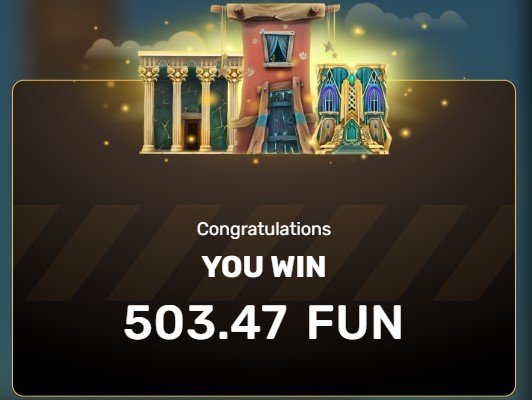
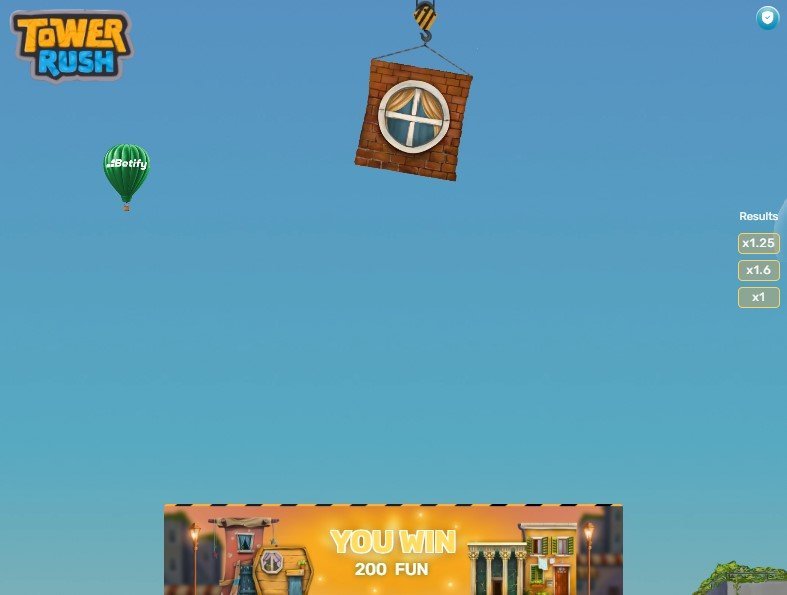
The Tower Rush demo is available on the official Galaxsys website. No registration, no email. You load it up, play with FUN credits. The gameplay, bonuses, block physics: everything is identical to the real money mode.
When you decide to get serious, you need to choose an online casino that offers the game. Galaxsys distributes Tower Rush on several international platforms. The licenses to check: Malta (MGA), Curaçao, Gibraltar. This information is usually found at the bottom of the casino's website, next to the license logo.
Creating an account takes five minutes. Identity, email address, password. Some casinos require a phone number. The minimum deposit is around €10–20 depending on the operator.
A classic trap to avoid: the welcome bonus. Yes, 100% or 200% on the first deposit sounds attractive. But the wagering conditions (wager x30, x40, sometimes more) don't always apply to crash games. Checking the terms and conditions before ticking the "accept bonus" box prevents blocking a withdrawal later.
Tower Rush and cashout management
Cashout is the entire strategy of the game. Each floor placed increases the multiplier, but each attempted floor adds risk. The question comes up every round: do we cash out now or push?
A few observations noted over about thirty sessions:
Cashing out between the 3rd and 5th floor produces frequent but small wins (x2–x4). The ratio of won rounds to lost rounds is around 70/30. Good for protecting the bankroll, frustrating when you see the multiplier continue to rise after cashing out.
Cashing out between the 7th and 10th floor, the intermediate zone. Multipliers between x6 and x15. The ratio shifts to 50/50 or 45/55. Unit gains compensate for lost rounds, provided you don't lose discipline after one or two misses.
Pushing beyond the 12th floor... speculative territory. Multipliers are high (x20+), successes are rare. Out of 10 attempts, 2 or 3 succeed. This is the approach of players who accept to see their bankroll fluctuate significantly.
My setting: I cash out at the 7th–8th floor in 80% of rounds. And occasionally, when the pace seems right (by the way, with no rational logic behind it), I try for the 11th or 12th. No more.
| Cashout zone | Floors | Multiplier | Win/loss ratio | Risk |
|---|---|---|---|---|
| Safe | 3rd–5th | x2–x4 | ~70/30 | Low |
| Intermediate | 7th–10th | x6–x15 | ~50/50 | Moderate |
| Speculative | 12th+ | x20+ | ~25/75 | High |
Tower Rush on smartphone: the thumb experience
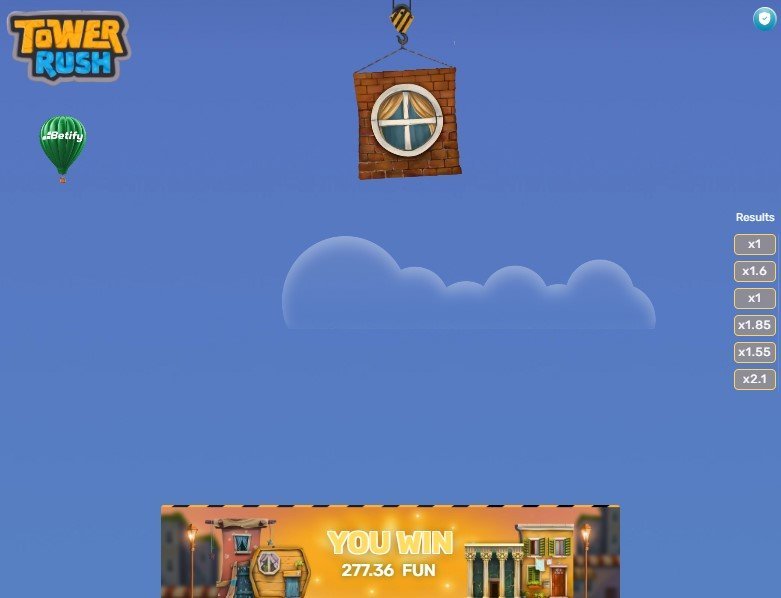
No app to download. Tower Rush runs in HTML5 directly in the phone's browser. On a Xiaomi Redmi Note 13 Pro, loading takes four seconds. On an iPhone 14, barely three.
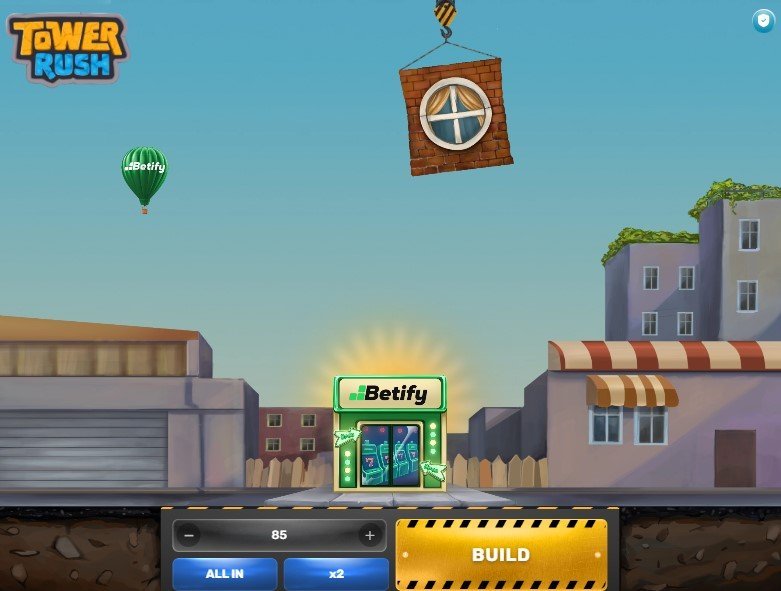
The touch interface works well in the early floors. The BUILD and CASHOUT buttons are placed accessibly, the thumb reaches both without any gymnastics.
Where it gets tricky: from the 9th or 10th floor. The block accelerates, the click window shrinks, and the precision of the thumb on a 6-inch screen doesn't match that of a mouse. I've missed at least five blocks on mobile that I would have placed with my eyes closed on a computer.
A helpful tip: play in portrait mode rather than landscape. The placement of the placement button is better, and the reaction time seems improved, even if it's subjective.
Data consumption is virtually zero. During a 25-minute session on 4G, my plan didn't budge by a visible megabyte.
The payout rate announced by Galaxsys ranges between 96.12% and 97%. In a quick comparison:
| Game | Average RTP |
|---|---|
| Tower Rush | 96.12–97% |
| Classic slots | 93–95% |
| Blackjack (basic strategy) | ~99% |
| Popular crash games | 95–97% |
Tower Rush ranks at the top of the crash games range. Not at the level of perfectly played blackjack (no one plays perfectly), but above the vast majority of slot machines.
What to remember: the RTP is calculated over millions of rounds. In 30 minutes of play, variance dominates. You can easily end up with +50% or -80% of your initial bankroll. The figure only becomes relevant in the very long term.
Security and fairness of the game
Each round of Tower Rush generates a verifiable cryptographic hash. The Provably Fair system allows the player to check afterward that the result has not been altered by the server. Specifically, the hash is published before the round, and verification is done via a shared key at the end of the round.
Galaxsys operates with RNG certifications issued by independent laboratories. The game is distributed on platforms with MGA, Curaçao, or Gibraltar licenses, which implies regular audits.
Is the game "fair"? Mathematically speaking: yes, the results are random and not manipulated. Financially speaking: the casino retains a 3–4% edge in the long run. Just like everywhere else.
What French-speaking players say
★★★★☆ "I've been playing Tower Rush since the end of January, especially on weekends. The thing that no one explains: the first three rounds are always the worst. It takes a warm-up period. After that, it flows. The Frozen Floor saved me once at x18, an unforgettable moment. But that's still rare." — Anthony G., Montpellier, February 2026, 4/5
★★★★★ "Best crash game I've tested, and I've tested quite a few. The difference with an Aviator or a Plinko is that each round requires an action. You're not just a spectator. However, I avoid playing in the evening after 10 PM; my accuracy is really poor when I'm tired." — Sarah N., Rennes, March 2026, 4.5/5
★★★☆☆ "Original concept, clean interface. My issue: bonuses come too rarely. In a one-hour session, I got three. I'm still waiting for the Triple Build. After 40 minutes without a bonus, the routine sets in, and you end up playing on autopilot, which is the worst thing to do." — Nicholas P., Lille, January 2026, 3.5/5
★★★★☆ "I started in demo mode on my Galaxy A54. Switching to real money was a psychological shock, even at €0.20 per bet. You have to prepare for it. The game itself is solid, the RTP is decent. I just wish there was a dashboard with the history of my rounds." — Emily R., Grenoble, February 2026, 4/5
What really changes when you bet money
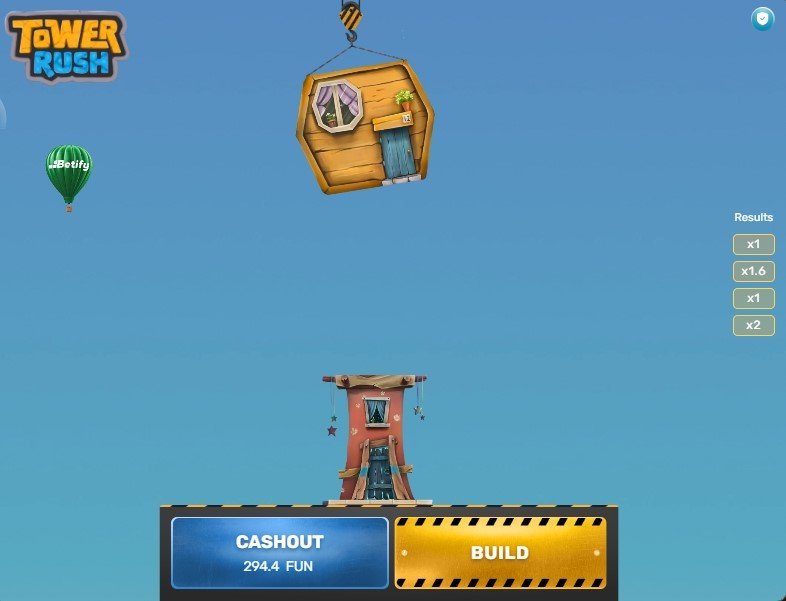
The mechanics don't change. The blocks fall the same way, the bonuses appear the same way, the RNG works the same way. What changes is in the mind.
In demo mode, missing a block on the 12th floor raises your shoulders. In real money, the same miss causes tension. The famous "just one more floor" takes on a whole new weight when each mistake costs something tangible.
My advice after making the switch: start with very low bets. €0.10 or €0.20 per round. It’s time to get used to the pressure of the paid mode without burning your budget in the first half hour. I started at €0.50 and went back down to €0.10 after three consecutive missed rounds because the frustration was starting to take over.
The first withdrawal triggers an identity verification (KYC). ID, proof of address. The process takes between 24 and 72 hours depending on the platforms. Nothing unusual, all regulated platforms do this.
My opinion after a month of play
Tower Rush delivers on its promises. The block placement mechanics keep each round active, which clearly differentiates it from passive crash games. The bonuses bring moments of surprise, even if they could be a bit more frequent. The RTP above 96% is reassuring in terms of redistribution.
The weak point remains the repetitiveness. The gameplay doesn’t renew itself from round to round, and the bonuses are too rare to break the routine during long sessions. After 30–35 minutes, the desire to continue decreases, and that's probably a sign to stop.
The free demo without registration is a real plus. It's good to test calmly before pulling out the card.
The rhythm of a typical session
Here’s what a 20-minute session on Tower Rush looks like, roughly.
The first 5 minutes serve as calibration. You find the timing, you adjust the click. The first 3–4 rounds are often the least profitable because you haven't found your rhythm yet.
Between the 5th and 15th minute, the productive zone. The timing is set, the blocks fall well, you’re cashing in regularly. This is where the gains happen, when you manage to chain 5–6 positive rounds in a row.
After 15 minutes, fatigue starts to set in. Precision errors return, especially on floors above the 8th. The brain slows down, the thumb (or mouse) loses responsiveness.
Beyond 20–25 minutes, errors on easy blocks appear. A miss on the 4th floor, a click too late on the 6th. Stop signal.
The trap: continuing by saying "I'll make it back on the next one." Each round is independent, the RNG has no memory. Fatigue, however, accumulates.
| Session phase | Duration | Player state | Profitability |
|---|---|---|---|
| Calibration | 0–5 min | Finding the timing | Low |
| Productive zone | 5–15 min | Optimal concentration | Maximum |
| Beginning of fatigue | 15–20 min | Decreasing precision | Declining |
| Risk zone | 20–25 min+ | Errors on easy blocks | Stop signal |
Play responsibly on Tower Rush
The game format creates a specific risk: the rounds are short (15–60 seconds), the pace is addictive, and mental fatigue sets in quickly. It's a mix that can lead to extending sessions beyond what's reasonable.
A few habits that help. Set a session budget before starting the first round. Not a daily or weekly budget, but a budget per 20-minute session. When it's reached, stop.
Use the demo for days when concentration isn't there. It's better to place blocks for free than to waste your bankroll when your reflexes aren't up to par.
And accept that variance is part of the game. Five failed rounds in a row can happen; it doesn't mean the sixth will be the one. Each round is independent.
For those who feel that the game is taking up too much space in their daily life, Players Info Service (0 974 75 13 13) is available every day. Free and confidential.